Recently, I have found an old Cisco IAD2400 at my work office. Of course, thinking to myself, “What can I do with this? What was this thing used for?” After thinking these things, I finally thought of a cool little experiment. Build a small local phone network. When I say “small,” I mean “small.” First, Cisco themselves describe these devices of being able to deliver wireless, voice, and security services (https://www.cisco.com/c/en/us/products/unified-communications/iad2400-series-integrated-access-devices/index.html). Thus, I have no reason why this thing cannot function as some sort of analog voice router.
I started with finding some old analog phones, like rotary and simple keypads. Then, I found some cables to make connections. Finally, I powered on the Cisco IAD and started configuring. I had to reset the IAD because it had an old config saved in it. Don’t worry, I saved the old config just in case we started deploying IAD2400s again.
Thankfully, I was able to find an amphenol cable (telco cable) that plugs into the back of the IAD2400 to get access to all the FXS lines (Foreign Exchange Subscriber). This is what an amphenol cable looks like:
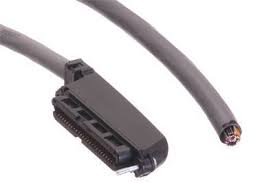
With me setting this local phone network up as an experiment, I did not take this cable into a 66-block (punch down block). I just stripped this cable back, and found the blue/white and orange/white pairs. blue/white got the number 2001. Orange/white got the number 2002. If my readers are not familiar with copper color code, then look at this:
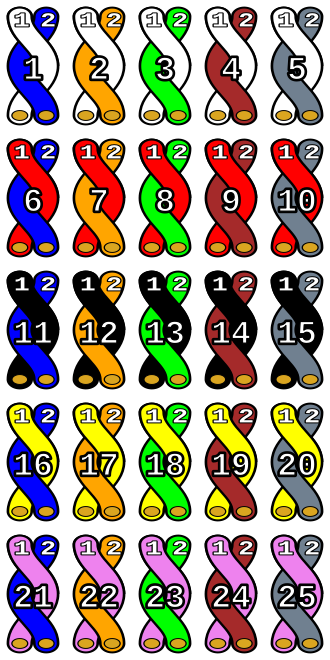
Also, look at the page on https://en.wikipedia.org/wiki/25-pair_color_code. This provides some good info on copper color codes.
Once I got all my physical cables in place, it was time to configure the IAD2400 to provide me with just two numbers. This way, I can call someone. Here is the very basic configuration that I was able to muster:
 !
voice-port 2/0
 caller-id enable
!
voice-port 2/1
 caller-id enable
!
!
dial-peer voice 1 pots
 destination-pattern 2001
 port 2/0
!
dial-peer voice 2 pots
 destination-pattern 2002
 port 2/1
!
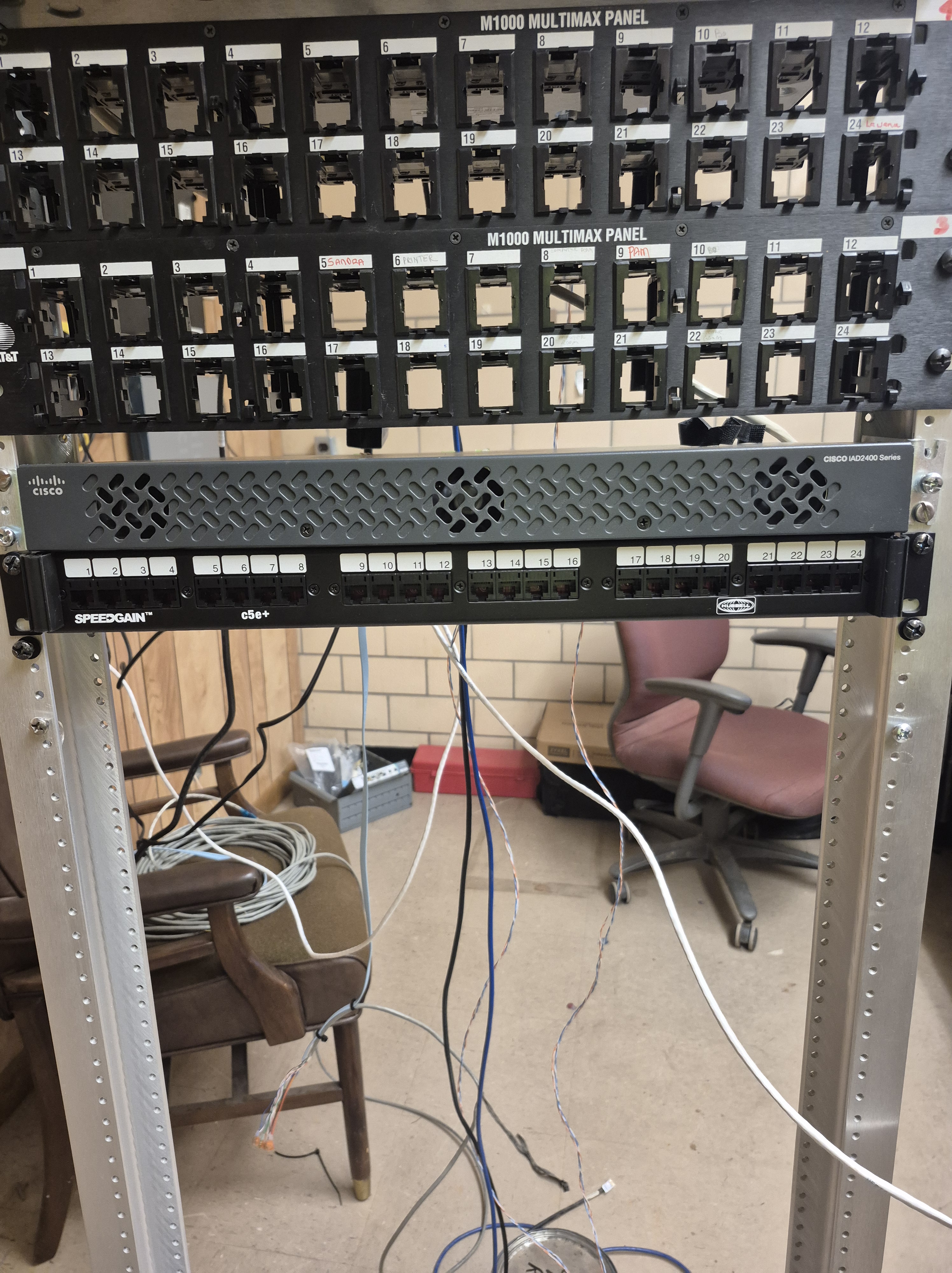
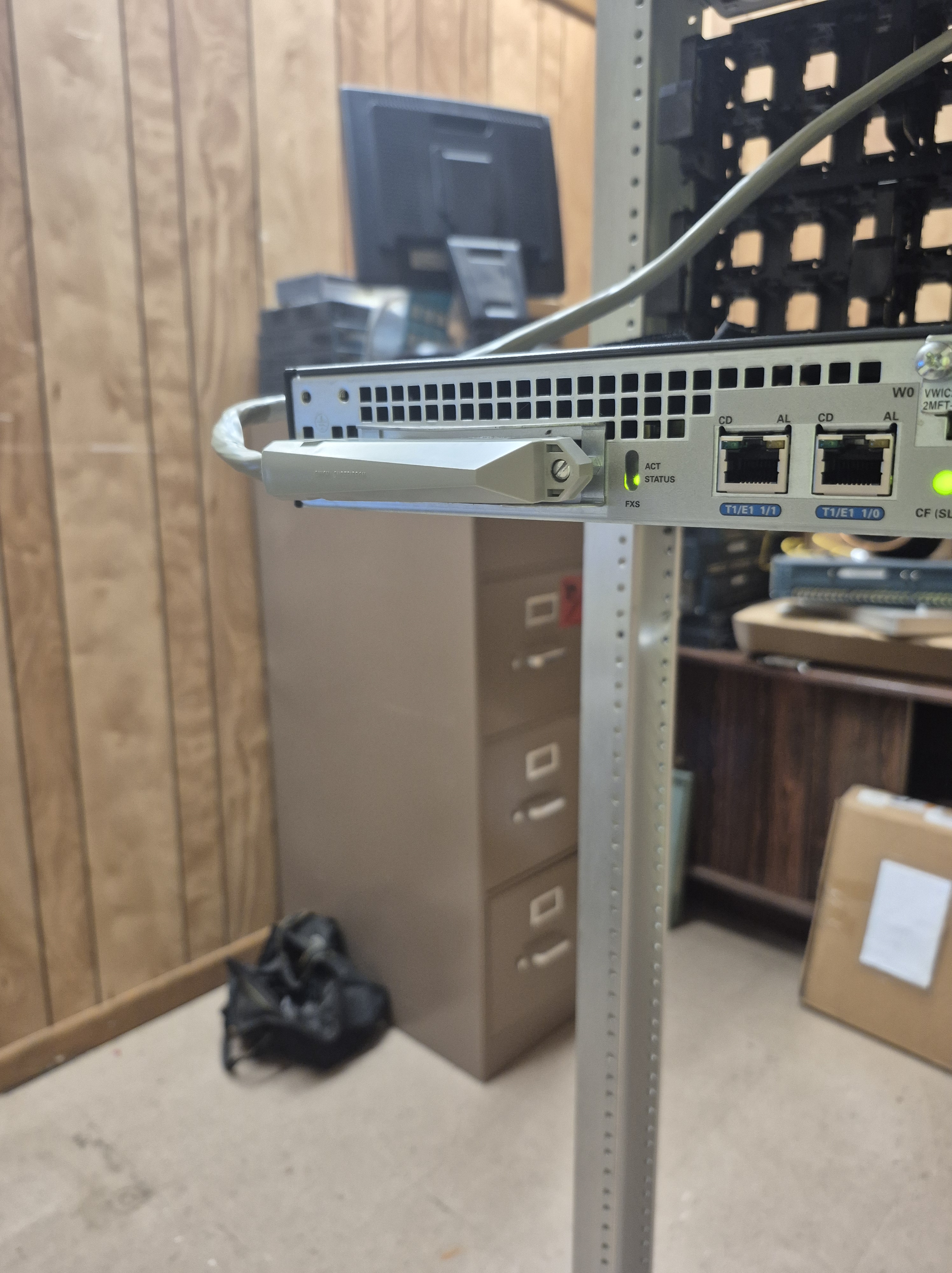
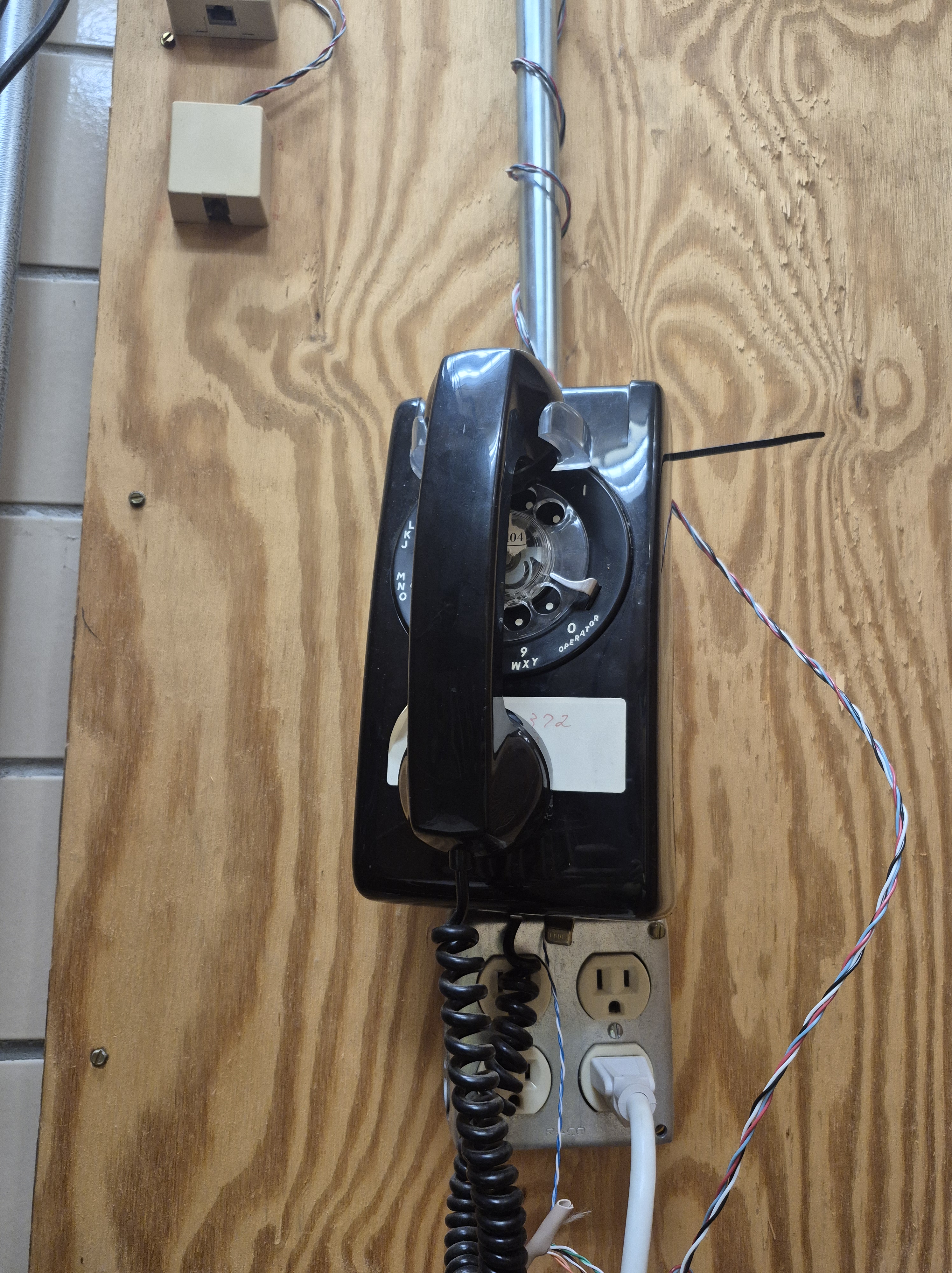
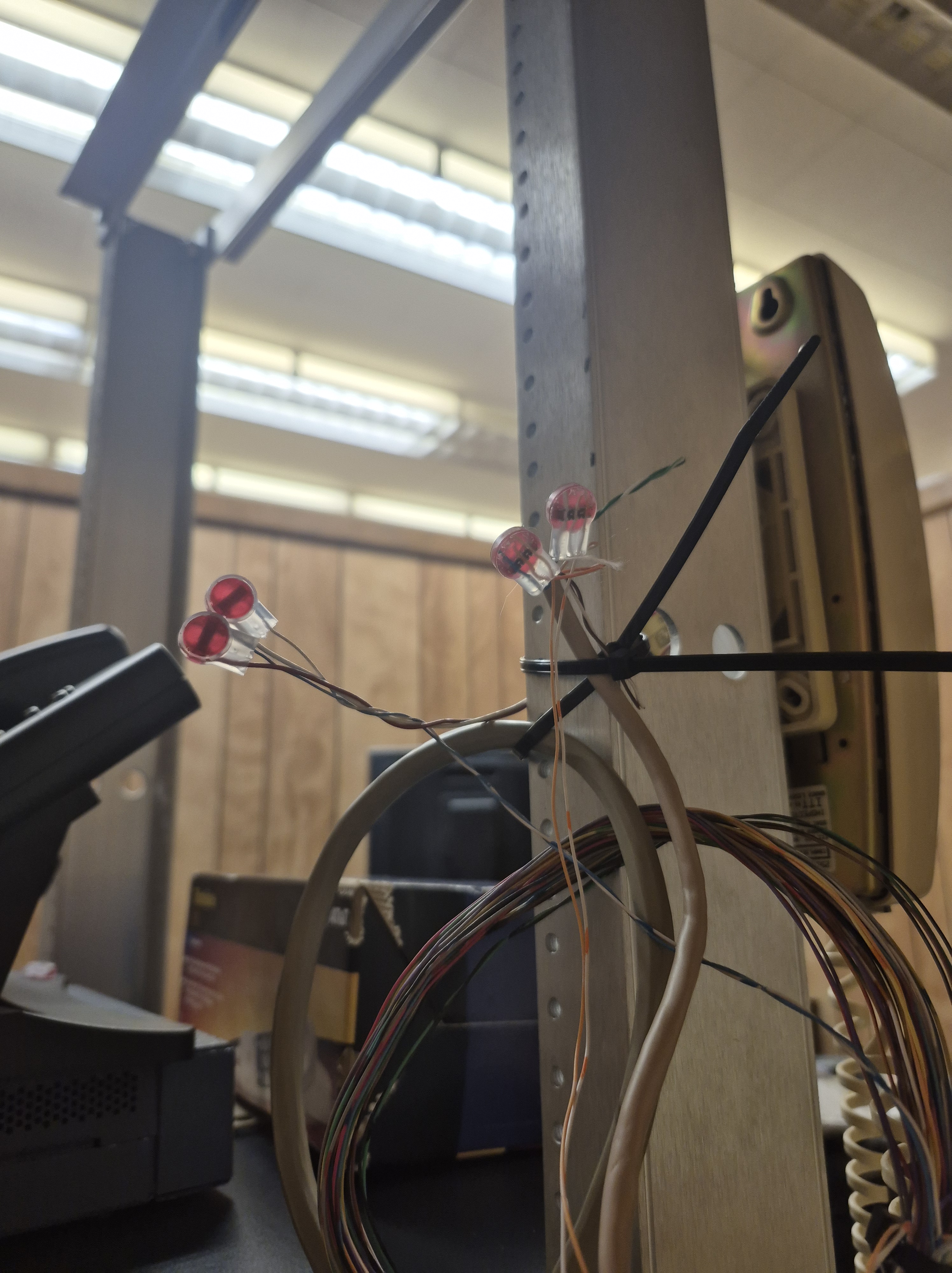
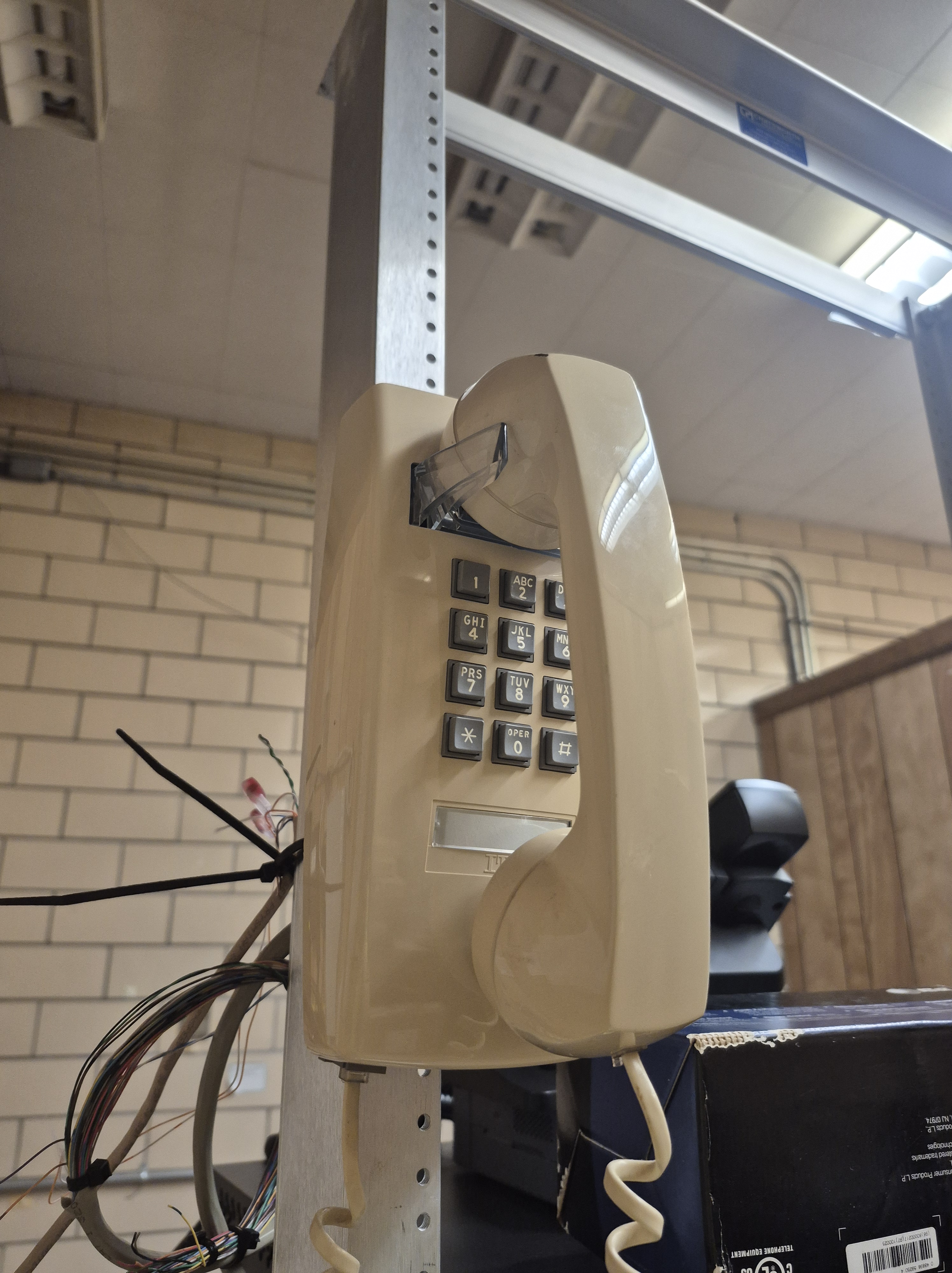
I was able to test the working condition of my local phone network by dialing 2002 on the phone wired to the 2001 number, and doing the reverse of that on the phone wired into 2002. Because I don’t know anyone else that likes playing with dinosaurs, I had to start a YouTube video on my phone, leave it playing next to one of the phones I just dialed out on, then go answer the other phone to see if I could hear the video….. as sad as that may sound. IT WORKED! For those who have never dialed a rotary phone, or heard on ring, it is one of the most satisfying noises. Of course, if one was from the era before the invention of electric heat, and the Internet, the sound of a rotary phone ringing of the wall may not be so satisfying. For a guy fascinated with the history of phones and things networking, it is a pretty cool sound.
Thanks for reading!

